
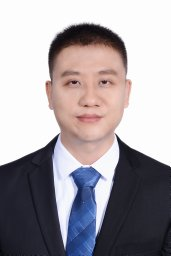
Kai Wang
Qingdao University, China
Biography:
Wang Kai, an outstanding postgraduate supervisor in Shandong Province, a provincial-level high-level leading talent, a specially appointed professor at Mount Taishan, IET Fellow (May 2027), is a native of Binzhou Boxing. He serves as a specially appointed professor at Qingdao University, holding degrees of doctoral and postdoctoral, as well as titles of professor and doctoral supervisor. Recognized as a top 2% globally leading scientist and a lifetime ranking scholar, he was listed among the 2024 and 2025 Elsevier China Highly Cited Scholars and ranked in the top 5% of national high-cited scholars. IEEE Senior Member, IOP Associate Membership, he is an adjunct professor at the Chinese Academy of Sciences, Dalian University of Technology, Hohai University, and China University of Petroleum.
He was honored as a model in the Shandong Province New Era Position Contribution Labor Competition, a mentor for innovation and entrepreneurship in higher education institutions, a high-level talent (Category C) in Qingdao City, an outstanding entrepreneurial mentor, and recipient of the "Jiezheng" Education Fund Innovation and Entrepreneurship Award. As the Deputy Director of the Weihai Innovation Research Institute at Qingdao University, he serves as a council member of the Shandong Provincial Energy Storage Society, a standing committee member of the Electronic Components and Materials Committee of the Shandong Electronics Society, a member of the Components Committee of the China Institute of Electrical Engineers, and a member of the Active Distribution Network and Distributed Power Professional Committee of the China Electrotechnical Society, as well as the IEEE PES (China) Marine Renewable Energy Subcommittee.
He has won two Shandong Provincial Science and Technology Progress Awards (first place in one), a bronze medal at the 77th Nuremberg International Invention Exhibition, a special award in the gold medal category at the 51st Geneva International Invention Exhibition, two Shandong Provincial Teaching Achievement Awards, a first prize in the Natural Science Outstanding Academic Paper Award (first place) in Liaoning Province, the 13th Qingdao City Youth Science and Technology Award, the Shandong Electronics Society Science and Technology Youth Award, and the first prize in the Shandong Provincial Power Innovation Award (first place), among others. He also serves as a judge in the China Innovation and Entrepreneurship Competition. As the founding editor-in-chief ofBulletin of Renewable and Sustainable Energy, he has been a young editorial board member forProtection and Control of Modern Power Systems,Artificial Intelligence and Applications (AIA),Journal of Teaching Innovation and Reform, and other journals such asPower Generation Technology,EcoEnergy,Chain,Carbon Neutralization,China Power,Guangdong Power, andElectrical Equipment and Energy Efficiency Management Technology.
He has led 8 research projects, participated in 5 standards, and secured 5 invention patents, 10 utility models, 5 software copyrights, and 3 commercializations. With over 30 SCI-indexed papers published (impact factor exceeding 20 in 3, and over 10 in 9), he has authored 3 monographs and textbooks, which were included in the National Key Publication Planning Project for the 14th Five-Year Plan period, awarded the title of "Top 10 Best Books in the Electrical and Electronics Field," ranking first, and recognized as a Shandong Provincial First-Class Textbook. He earned his master's and doctoral degrees from Dalian University of Technology (recommended admission) and received the National Scholarship for Doctoral Students and the Liaoning Provincial Outstanding Graduate Award.
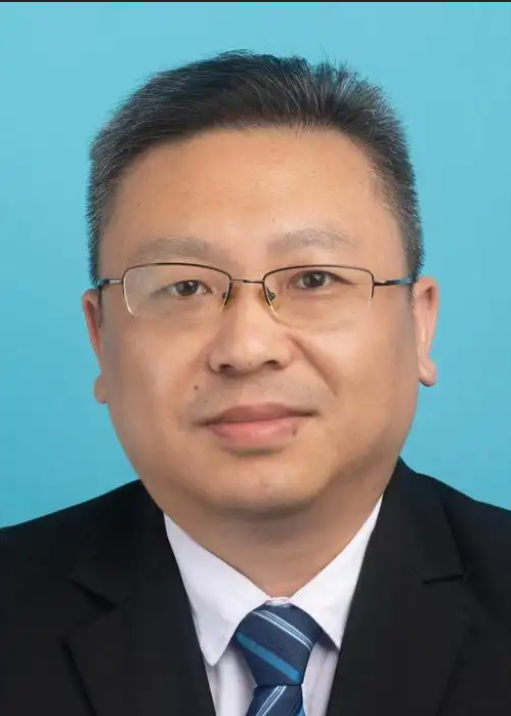
Prof. Dongbo Zhang
Xiangtan University, China
Biography:
Prof. Zhang Dongbo is a Chair Professor and Doctoral Supervisor. He received his bachelor's degree from Xiangtan University in 1996, his master's degree from Hunan University in 2001, and his Ph.D. from Hunan University in 2007. From 2009 to 2010, he was a visiting scholar at the University of Groningen in the Netherlands.
Prof. Zhang serves as Vice President of the Hunan Association of Automation and as a Standing Committee Member of the Artificial Intelligence Education Committee of the Hunan Artificial Intelligence Society. He also serves on several specialized committees of academic societies in the fields of pattern recognition and machine intelligence, computer vision, intelligent robotics, hybrid intelligence, and visual cognition and computing. From 2018 to 2022, he served on the editorial board of the Newsletter of the Committee on Pattern Recognition and Machine Intelligence. His other professional appointments include recognition as a Young Backbone Teacher of Hunan Province, expert member of the Technical Committee of the Hunan Advanced Manufacturing Industry Science and Technology Innovation Alliance, member of the Ningxiang Expert Advisory Committee for High-End Equipment Manufacturing, and expert of the Xiangtan Science and Technology Innovation Think Tank.
His research interests include machine vision, machine intelligence, and intelligent robotics. Prof. Zhang has led or participated in more than 20 research projects, including a Key Program of the National Natural Science Foundation of China, a Key Project under the Guangdong Basic and Applied Basic Research Foundation Joint Fund, Hunan Province science and technology projects on strategic emerging industries and the commercialization of major scientific and technological achievements, and projects funded by the Natural Science Foundation of Hunan Province.
He has published more than 120 research papers in leading journals, including IEEE Transactions on Instrumentation and Measurement, IEEE Transactions on Industrial Electronics, Medical Image Analysis, IEEE Robotics and Automation Letters, Computers and Electronics in Agriculture, Acta Automatica Sinica, Acta Electronica Sinica, and Journal of Software. He holds 10 authorized invention patents and has authored one textbook published by Science Press.
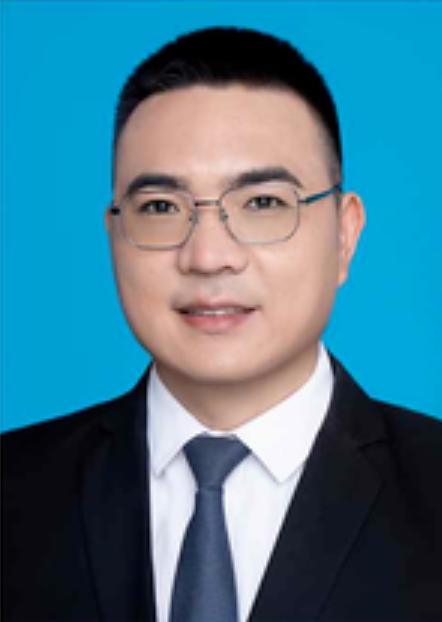
Prof. Wuxing Zhou
Hunan University of Science and Technology, China
Biography:
Prof. Zhou Wuxing is a doctoral supervisor at Hunan University of Science and Technology, where he currently serves as Associate Dean of the School of Materials Science and Engineering.He is a recipient of the Hunan Provincial Young Science and Technology Talent Award (Hejian Program) and serves as Chair of the Hunan University of Science and Technology Branch of the Revolutionary Committee of the Chinese Kuomintang (RCCK).
His research focuses on electron transport, thermal transport, and thermoelectric conversion in semiconductor materials, with particular interests in nanoscale thermal transport, nanoelectronics, and thermoelectric materials design. He has conducted systematic research into fundamental scientific questions concerning electrical and thermal transport in semiconductor systems, with an emphasis on elucidating how microstructures and interfacial effects govern electron and phonon transport. His work also encompasses theoretical analysis and performance optimization of materials for thermoelectric conversion, nano-thermal information devices, and solid-state energy storage. Through these efforts, he aims to uncover the underlying physical principles governing electrical and thermal transport in materials and to provide theoretical foundations and design strategies for the development of advanced functional materials and devices.
Professor Zhou has served as Principal Investigator for three National Natural Science Foundation of China (NSFC) projects, including one Young Scientists Fund project and two General Program projects. He has also led a Hunan Provincial Young Science and Technology Innovation Talent Program (Hejian Program) project. His research experience spans multiple national- and provincial-level funding programs, supported by various research platforms advancing fundamental and applied fundamental research in related fields.
He has published more than 90 SCI-indexed papers in internationally recognized journals, including Advanced Functional Materials, Physical Review B, Physical Review Applied, Applied Physics Letters, and Journal of Materials Chemistry A. His publications have received over 3,000 SCI citations, and he was named to the World’s Top 2% Scientists list in 2024.
Update constantly...